
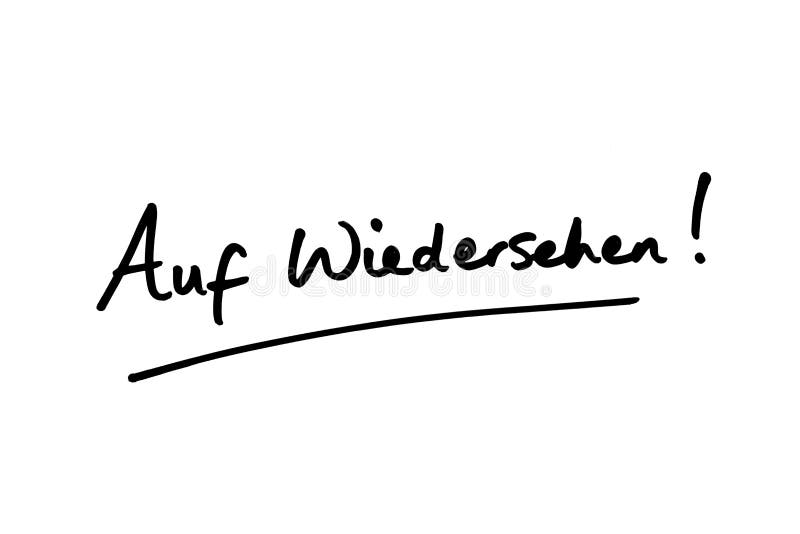
Auf Wiedersehen in English: A nuanced translation that goes past a easy goodbye, revealing the depth of its that means. Understanding the context behind this German farewell is essential for efficient communication.
This information delves into the nuances of translating “Auf Wiedersehen,” exploring numerous situations the place it is perhaps used and the right way to finest convey its supposed message. We’ll study the cultural implications and supply sensible examples to be used in numerous settings.
The German phrase “auf wiedersehen” is a standard farewell expression. Understanding its nuances and correct English translations is essential for efficient communication, particularly in intercultural settings. This information delves into the that means, numerous translations, and applicable contexts for utilizing this phrase.
Understanding the That means of “Auf Wiedersehen”: Auf Wiedersehen In English
Auf wiedersehen actually interprets to “till we see one another once more.” It is a formal and well mannered approach to say goodbye, conveying a way of anticipation for a future assembly.
English Translations: Past the Literal
Whereas a direct translation is “till we see one another once more,” the perfect English equal typically will depend on the context. Contemplate these choices:
- Goodbye: That is the most typical and versatile translation, appropriate for many conditions.
- So long: A extra informal various, appropriate for pals or acquaintances.
- See you once more: Emphasizes the expectation of a future encounter.
- Till subsequent time: Applicable for conditions the place a particular future assembly is anticipated.
- So lengthy: A barely extra casual and fewer formal possibility, nonetheless appropriate for a lot of contexts.
Context Issues: Selecting the Proper Translation
The most effective translation for “auf wiedersehen” hinges on the context. Is it a quick alternate with a colleague, a heartfelt goodbye to a good friend, or a proper parting with a stranger? Every state of affairs dictates a distinct degree of ritual and tone.
Formal Conditions
In skilled or formal settings, “goodbye” or “till subsequent time” are often essentially the most applicable decisions. These choices preserve a respectful {and professional} demeanor.
The frequent phrase “auf wiedersehen” in German interprets to “goodbye” in English. Realizing the right way to specific good needs, like “bless you” in Spanish, is equally necessary for efficient communication. As an example, studying the Spanish equal of “bless you” will vastly improve your interpersonal abilities and reveal your cultural consciousness, simply as understanding “auf wiedersehen” in English will enhance your worldwide interactions.
Contemplate exploring the nuances of bless you in spanish to additional broaden your intercultural understanding, earlier than saying “auf wiedersehen” subsequent time.
Casual Conditions
With pals or household, “goodbye” or “so lengthy” are extra appropriate, reflecting the informal nature of the connection.
Whereas “auf wiedersehen” in English interprets on to “goodbye,” the colourful vitality of a phrase like “they see me rollin'” from the tune they see me rollin song captures a distinct, extra dynamic farewell. Finally, each convey a way of parting methods, however with vastly completely different tones. This highlights the richness of language in conveying numerous feelings.
Conditions Implying a Future Assembly, Auf wiedersehen in english
If there’s an express expectation of a future assembly, “see you once more” or “till subsequent time” work properly, highlighting the anticipated reunion.
Past the Phrase: Cultural Nuances
Understanding the cultural context is essential to efficient communication. In some cultures, a easy “goodbye” is adequate, whereas others would possibly choose a extra elaborate farewell. Being conscious of those nuances enhances communication and builds stronger relationships.

German-Talking Cultures
In German-speaking international locations, “auf wiedersehen” is an ordinary and broadly used farewell. Its exact that means and use are usually well-understood.
Whereas “auf wiedersehen” in English interprets on to “goodbye,” it is greater than only a easy farewell. Understanding the nuances of “flights of fancy,” a time period typically related to daydreams and imaginative escapism, flights of fancy definition reveals the potential for a deeper, extra evocative farewell. Finally, “auf wiedersehen” holds a particular resonance, suggesting a extra considerate, lingering goodbye.
Different Cultures
In different cultures, the suitable farewell phrase would possibly differ considerably. Researching native customs and etiquette is important for easy interactions.
Examples in Context
Let’s illustrate how “auf wiedersehen” is perhaps translated in numerous contexts:
- Formal assembly: “Auf wiedersehen, Herr Schmidt.” (English: Goodbye, Mr. Schmidt.)
- Pleasant farewell: “Auf wiedersehen, meine Freunde!” (English: See you once more, my pals!)
- Informal goodbye: “Auf wiedersehen, bis bald!” (English: See you once more, quickly!)
Frequent Errors to Keep away from
Misinterpreting the context can result in awkward or inappropriate communication. Keep away from utilizing overly informal translations in formal settings and overly formal translations in casual settings. Selecting the right translation enhances the readability and appropriateness of your farewell.
Conclusion: Mastering the Artwork of Farewell
Mastering the subtleties of “auf wiedersehen” in English is essential to efficient communication. By understanding the nuances of its numerous translations and contexts, you may have interaction in significant and respectful interactions with folks from completely different cultures.
[See also: Guide to German Greetings]
[See also: Understanding German Culture]
Whereas “auf wiedersehen” interprets to “goodbye” in English, it is fascinating to contemplate how the English language makes use of two-letter phrases, like “by” and “ty” (try two letter words with y ). Finally, “auf wiedersehen” stays a classy and chic farewell, reflecting a deeper cultural nuance in communication.
[Image: A table comparing the appropriate English translations for “auf wiedersehen” in different contexts]
Name to Motion: Share your ideas and experiences utilizing “auf wiedersehen” within the feedback under. What are another contexts the place you would possibly use this phrase? Let’s talk about!
In conclusion, mastering the interpretation and software of “Auf Wiedersehen” permits for a extra refined and culturally delicate method to farewells. By understanding its contextual variations, you may confidently navigate conversations with German audio system and convey your sentiments with precision and charm.
Important FAQs
What are some formal options to “Auf Wiedersehen”?
Formal options would possibly embody “Auf Wiedersehen,” “Bis bald,” or “Bis später” relying on the specified degree of ritual and the context of the dialog.
Whereas “auf wiedersehen” in English interprets to “goodbye,” it is greater than only a easy farewell. It suggests a leaving with a way of anticipation for future encounters, just like the spirit of blazing a path— defining a new path. Finally, “auf wiedersehen” implies a connection that extends past the instant parting.
How does using “Auf Wiedersehen” differ from “Goodbye”?
“Auf Wiedersehen” typically implies a extra heartfelt and probably longer-lasting farewell, whereas “Goodbye” can be utilized in additional informal settings or shorter interactions. It carries a way of anticipation for a future encounter.
When is it applicable to make use of “Auf Wiedersehen” in a enterprise context?
Utilizing “Auf Wiedersehen” in a enterprise context is usually acceptable, although extra formal choices is perhaps most popular for significantly necessary conferences or skilled settings. It may be a well mannered and memorable approach to conclude a dialogue.
